
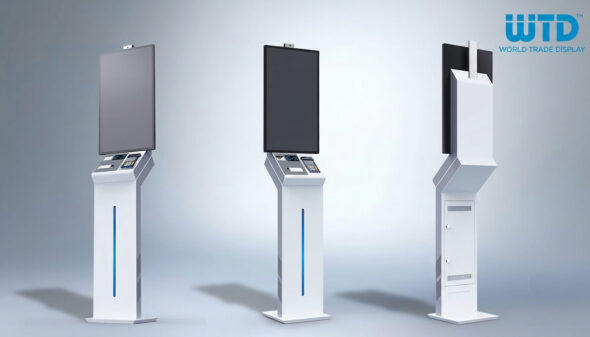
Get your SPOT Price with the COUPON we sent you:Indoor Floor Standing Kiosk

Dys
Hrs
Min
Sec
Flash
Sale

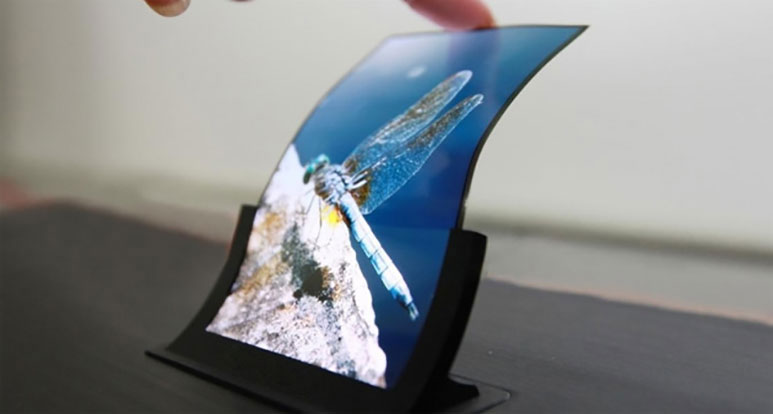
The flexible smartphones are behind the corner

After years of promises and expectations, maybe it’s the right time.

LG is perhaps the most forward, having shown on previous occasions an eighteen inch screen and a whole generation of screens for tablets, smartphones, televisions and watches all with rollable screens.

This year it is rumored that Samsung is about to present a folding Galaxy, due to a patent filed by the Korean company, folding attention, not rolled up.

Apple has also filed patents on flexible screens and folding smartphones. The most recent (below) has been accused of scarce realism. Yet a folding smartphone could be the new rabbit from the cylinder, after last year’s iPhone X. The company has sold until today 1.33 billion iPhones and certainly, to maintain growth, it needs news.

FROM MARGINAL TO COMMERCIAL

In short, all the big ones have invested heavily in these technologies, however, if something goes out, we should hardly expect mass success, right away. Initially the technology will be for a few, with relative reliability and high prices. In a few years we will see then the flexible displays adapt to televisions and devices for virtual reality.

WHY FLEXIBILITY IS IMPORTANT

Let’s start from the clocks.

Flexible screens would be more comfortable to wear, largerthinner, better in definition, with less energy consumption thanks to the use of OLED.

On the mobile the advantages would be similar.

Patents tend to suggest devices with larger screens than now, which become very compact once folded.

The race is open.

Who will make the news first, but also significant numbers of sales, will have a significant advantage over competitors.
Share

More News

Gaming & Entertainment
WTD at ENADA 2026 – Hall C1, Stand 069

The interactive solutions developed by World Trade Display for the Gaming & Entertainment sector are designed to deliver a unique and engaging experience, both for players and for operators. All products include different types of Light-Bar Surround Multicolor, characterized by innovative designs and made with high-quality materials, specifically developed to

Read more »

QUICK GUIDE TO LED WALL CABINETS

LED Walls have become the undisputed stars of modern visual communication. From large live events to trade shows, retail environments, and corporate spaces, these displays transform any setting into an immersive and impactful experience. But to ensure top performance, choosing the right panel is not enough: the real game-changer is

Read more »

The motherboard market is experiencing a sharp increase in costs, mainly driven by DRAM memory shortages and high chip prices, further aggravated by the surge in demand from the AI sector. This trend, expected to continue until 2028, has led to a significant drop in sales and is forcing a return to older technologies such as DDR4.

Below are the key details regarding the cost increase:

  • Main Causes: Strong demand for Artificial Intelligence (AI) components has led manufacturers to prioritize the production of high-capacity memory, resulting in shortages and higher DRAM costs, which directly impact motherboard prices.
  • Price Impact: Significant price increases are being observed, with some DDR5 kits exceeding USD 600. Analysts forecast a steady upward trend in the long term, estimated through 2028.
  • Market Situation: Rising RAM prices have caused a 40%–50% decline in motherboard sales, described in some sectors as a “memory apocalypse.”
  • Emerging Trends: There is renewed interest in older motherboards and memory technologies, such as DDR4,
    due to the prohibitive costs of next-generation platforms.

The situation is critical, with price increases affecting not only key components but the entire PC ecosystem as well, including motherboards, which are also being impacted by memory shortages. Accordingly, due to the ongoing increases in the cost of components and other materials, as previously communicated in our email since February, all prices agreed upon earlier and all quotations issued are no longer to be considered valid. Please contact our sales department for updated information and to confirm product availability.

The motherboard market is experiencing a sharp increase in costs, mainly driven by DRAM memory shortages and high chip prices, further aggravated by the surge in demand from the AI sector. This trend, expected to continue until 2028, has led to a significant drop in sales and is forcing a return to older technologies such as DDR4.

Below are the key details regarding the cost increase:

  • Main Causes: Strong demand for Artificial Intelligence (AI) components has led manufacturers to prioritize the production of high-capacity memory, resulting in shortages and higher DRAM costs, which directly impact motherboard prices.
  • Price Impact: Significant price increases are being observed, with some DDR5 kits exceeding USD 600. Analysts forecast a steady upward trend in the long term, estimated through 2028.
  • Market Situation: Rising RAM prices have caused a 40%–50% decline in motherboard sales, described in some sectors as a “memory apocalypse.”
  • Emerging Trends: There is renewed interest in older motherboards and memory technologies, such as DDR4,
    due to the prohibitive costs of next-generation platforms.

The situation is critical, with price increases affecting not only key components but the entire PC ecosystem as well, including motherboards, which are also being impacted by memory shortages. Accordingly, due to the ongoing increases in the cost of components and other materials, as previously communicated in our email since February, all prices agreed upon earlier and all quotations issued are no longer to be considered valid. Please contact our sales department for updated information and to confirm product availability.