

In the fast-evolving world of interactive technology, touch screen monitors are revolutionizing the way we interact with digital devices. From industrial applications to consumer electronics, the demand for reliable and efficient solutions is constantly growing.
World Trade Display (WTD), a leading provider of high-quality touch screen solutions, presents a complete overview of the five main touch screen technologies. This guide helps purchasing managers and display distributors choose based on quality, functionality, and application needs.
1. Resistive Touch Screens
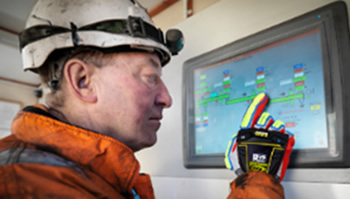
Resistive touch screens use two transparent layers separated by a small gap. When touched, the layers come together and create an electrical circuit.
They are compatible with fingers, stylus, or any object, offering high precision, though with lower clarity and sensitivity.
Key Advantages:
- Cost-effective
- High precision
- Versatile input options
Ideal Applications:
- Industrial controls
- POS systems
- Medical devices
2. Capacitive Touch Screens
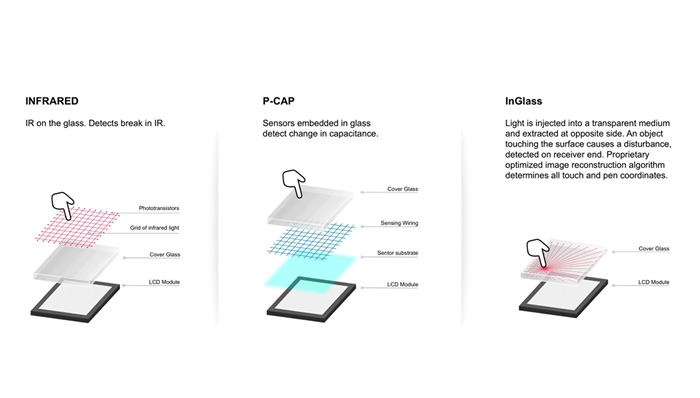
Capacitive touch screens, now the standard in consumer electronics, detect touch through the electrical properties of the human body.
The most advanced version, Projected Capacitive (PCT/PCAP), supports multi-touch and ensures greater durability.
Key Advantages:
- High sensitivity and responsiveness
- Multi-touch capability
- Clear, sharp images
Ideal Applications:
- Smartphones and tablets
- Interactive kiosks
- Automotive displays
3. Infrared (IR) Touch Screens
IR touch screens create an invisible grid of light using LEDs and photodiodes. When an object interrupts the grid, the touch is detected.
Since no additional layers are involved, they ensure maximum visual clarity and can be easily scaled to large sizes.
Key Advantages:
- Large-format scalability
- Unaffected by external light
- High durability
Ideal Applications:
- Large-format displays
- Outdoor kiosks
- Interactive whiteboards
4. Surface Acoustic Wave (SAW) Touch Screens
SAW technology uses ultrasonic waves that travel across the display surface. The touch absorbs part of the wave, which is then detected.
It ensures high clarity and sensitivity but may be vulnerable to dust and water.
Key Advantages:
- Excellent image quality
- Highly responsive
- Long lifespan
Ideal Applications:
- Museum exhibits
- Medical monitors
- Premium kiosks
5. Optical Touch Screens
Optical technology uses cameras placed at the corners of the screen to detect the position and movement of the touch.
It is a scalable solution, ideal for large displays, with multi-touch support.
Key Advantages:
- Multi-touch support
- Extreme scalability
- Cost-effective for large formats
Ideal Applications:
- Interactive digital signage
- Educational technology
- Large-scale installations
How to Choose the Right Technology
The choice depends on environment, interaction methods, and display requirements. World Trade Display (WTD) provides customizable solutions, ensuring optimal performance, durability, and user experience. Whether for industrial Panel PCs or next-generation consumer electronics, understanding these technologies enables truly informed decisions.
👉 For tailor-made touch solutions, contact WTD: our expertise will guide you in creating competitive and innovative products.