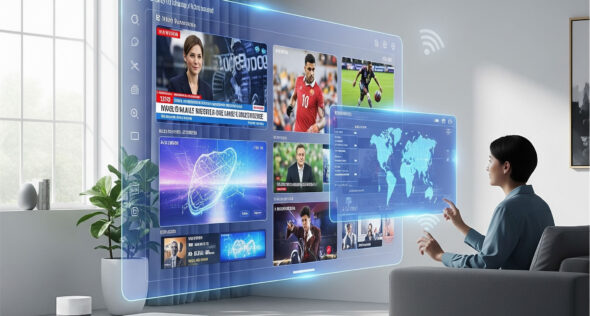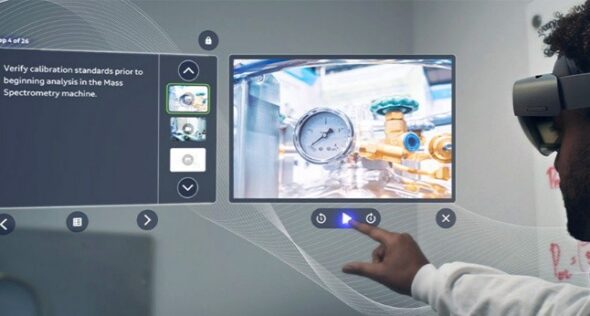


Digital signage is experiencing a new phase of acceleration. From compact countertop monitors to large-format window and wall displays, the goal is clear: communicate better—more brightly, reliably, and with easier management.
Today, companies are looking for solutions that truly operate 24/7, remain clearly visible in any lighting condition, and allow fast, centralized content updates, even across hundreds of locations.
Below are the key technologies and trends shaping the evolution of the sector, for both small displays and large-format installations.
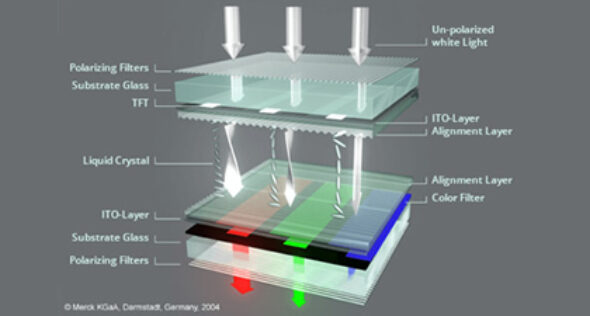
1) Next-Generation LCD: Better Light Control (MiniLED / FALD)
Traditional LCD technology continues to improve, especially in backlight management:
- Edge LED (entry level): edge-lit panels, cost-effective but with less deep blacks.
- Direct LED: LEDs placed behind the panel, offering better uniformity.
- FALD – Full Array Local Dimming: zone-based backlighting that adjusts dynamically to the content.
- MiniLED: an evolution of FALD using much smaller and denser LEDs, enabling a far higher number of dimming zones.
Key MiniLED advantages:
- improved perceived contrast
- reduced haloing around bright objects
- greater effectiveness with high-contrast and pseudo-HDR content (HDR in signage is typically more functional than cinematic)
Best suited for:
bright storefronts, 55–98” displays, menu boards in high-light environments, high-impact visual content.
2) OLED and QD-OLED: Perfect Blacks, with Disciplined 24/7 Management
OLED and QD-OLED are emissive technologies: each pixel generates its own light.
Technical advantages
- true black (pixel completely off)
- extremely fast response times
- high perceived image quality for premium content
Considerations for digital signage
- burn-in / image retention management: not prohibitive, but requires good practices (dynamic content, pixel shifting, limits on static elements)
- careful control of average brightness and thermal management for continuous operation
Where it makes sense:
showrooms, premium corners, and installations where design, contrast, and visual quality are priorities and content playlists are well designed.
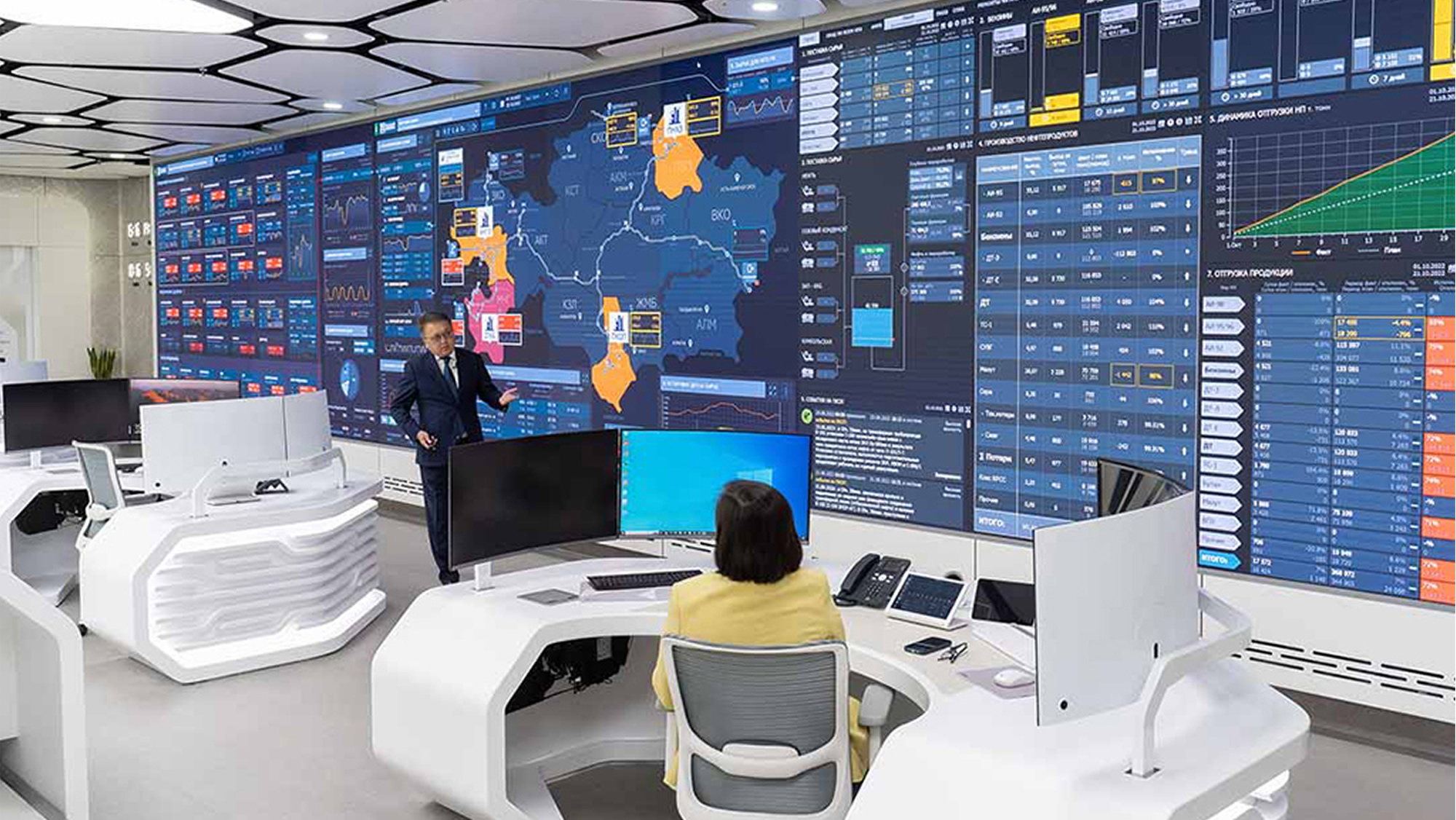
3) Direct View LED (LED Wall): True Large Format Without Limits
Direct View LED does not use an LCD panel—the screen is built from LED modules.
Key concepts:
- Pixel pitch: distance between pixels; the smaller it is, the closer viewers can stand without seeing a grid effect.
- COB / GOB: LED packaging and protection technologies that improve robustness, uniformity, and serviceability.
- Front serviceability: essential for flush-to-wall installations.
- Calibration: critical to ensure color and brightness uniformity across large surfaces.
Where it excels:
large indoor walls, lobbies, events, high-impact retail, and environments requiring high brightness and custom dimensions.
4) MicroLED: A Top-Tier Promise, Still Selective
MicroLED combines emissive display principles with microscopic LED components:
- very high brightness
- long lifespan
- excellent contrast
Today, it remains a high-end and selective solution, due to cost and manufacturing complexity, but it clearly represents a future direction for premium large displays.
5) High Brightness and Optics: Readability Is a Science
In digital signage, real-world readability matters more than headline specifications.
Critical factors include:
- high luminance for storefronts and brightly lit environments
- anti-reflective / anti-glare coatings
- optical bonding (laminating glass to the panel), which provides:
- reduced internal reflections
- improved perceived contrast
- greater mechanical robustness (ideal for totems, kiosks, and countertop displays)
These choices often have a greater impact than the panel type itself, especially for small displays exposed to direct light.
6) Integrated Platforms: Signage-Grade SoCs and Modularity
An increasing number of professional displays integrate a built-in SoC, reducing the need for external media players:
- HTML5, image, and video playback
- basic scheduling
- diagnostic and monitoring features
In larger deployments, modular standards are gaining ground:
- OPS / SDM modules allow computing power to be upgraded without replacing the display
- clear benefits for maintenance and scalability in large networks
7) Connectivity and Power: Fewer Cables, More Control
Key trends becoming standard requirements:
- USB-C (in selected use cases) to simplify signal and peripheral connections
- wired LAN for reliability in large-scale networks
- RS-232 and control APIs for AV system integration
- optimized power and installation solutions to reduce deployment time and operational costs
8) CMS, Monitoring, and Security: The Real Leap at Scale
When moving from a few screens to hundreds, management technology becomes decisive:
- content management with roles and permissions
- advanced scheduling
- proof-of-play
- remote monitoring (temperature, player status, storage, network, uptime)
- security: controlled updates, whitelisting, credential management, and network segmentation
Often, the “most advanced” display is the one that reduces maintenance costs and downtime.
How to Choose Technically (Simple Rule)
- Storefront / strong ambient light: high-brightness LCD with advanced optics, or LED wall when size and impact are required.
- Very large walls: Direct View LED with pixel pitch matched to viewing distance.
- Premium installations: OLED (with 24/7-aware content design) or high-end LED.
- Static information / infrequent updates: ePaper, when video is not required.